
Table of Contents
If you have found yourself thinking, “My cat is sneezing a lot,” and you don’t know why, you have come to the right place. While an occasional sneeze is a normal bodily reflex, persistent sneezing can signal anything from a minor environmental irritant to a complex upper respiratory infection.
In this comprehensive guide, we will break down exactly why our feline friends sneeze, how to differentiate between a harmless tickle and a serious illness, and the step-by-step actions you need to take to help your pet feel better.
Why Is My Cat Sneezing a Lot? Understanding the Basics
To understand why your cat is unwell, we must first understand the mechanism behind the sneeze.
The Anatomy of a Feline Sneeze
Sneezing is a protective reflex. Just like in humans, it is the body’s way of forcibly expelling irritants from the nasal cavity. When the sensitive mucous membranes inside your cat’s nose detect a foreign particle—dust, pollen, smoke, or a pathogen—the brain triggers a sudden, explosive release of air to clear the passage.
Occasional vs. Chronic Sneezing
There is a massive difference between a cat that sneezes once because they sniffed a dusty corner and a cat that is sneezing repeatedly throughout the day.
- Acute Sneezing: Sudden onset, usually caused by a temporary irritant or a new viral infection.
- Chronic Sneezing: Sneezing that persists for weeks or months, often indicating underlying structural issues, chronic rhinitis, or dental disease.
If my cat is sneezing a lot suddenly, it is usually a sign that the nasal lining is inflamed (rhinitis) or the sinus lining is irritated (sinusitis).
Common Causes of Feline Sneezing
When a cat owner asks a veterinarian, “Why is my cat sneezing so much?” the answer usually falls into one of four main categories.
1. Viral Upper Respiratory Infections (The “Cat Flu”)
The most common culprit for a sneezing cat is a viral infection. This is essentially the feline equivalent of the common cold. Statistics from veterinary research suggest that arguably 80-90% of feline upper respiratory infections are caused by two specific viruses:
- Feline Herpesvirus (FHV-1): This is highly contagious. Once a cat is infected, they carry the virus for life. It can lay dormant and flare up during times of stress (like moving house or a new pet).
- Feline Calicivirus (FCV): Similar to herpesvirus but often affects the mouth as well, causing ulcers on the tongue or gums.
2. Environmental Irritants and Allergies

Cats have a much stronger sense of smell than humans, making them highly sensitive to airborne particles. If your cat sneezes mostly when you are cleaning or after you’ve used personal care products, look for these triggers:
- Cigarette smoke: A major respiratory irritant.
- Perfume and colognes.
- Dusty cat litter: Clay litter creates fine dust that is easily inhaled.
- Cleaning sprays: Bleach, carpet powders, and air fresheners.
- Pollen and mold: Seasonal allergies affect cats, too.
3. Dental Disease
This is a cause many owners overlook. The roots of a cat’s upper teeth sit right next to the nasal passages. If a tooth becomes infected or develops a root abscess, the infection can eat through the bone and penetrate the nasal sinus.
- The Result: Severe inflammation causing chronic sneezing, often accompanied by bad breath and difficulty eating.
4. Foreign Bodies
Cats are curious. Occasionally, they may inhale something that gets stuck in the nasal passage. Common culprits include:
- Blades of grass.
- Foxtails (plant awns).
- Bits of food.This usually causes violent, sudden sneezing as the cat desperately tries to dislodge the object.
Symptoms That Accompany Sneezing: When to Worry
Context is key. If my cat is sneezing a lot, I immediately look for “partner symptoms.” These additional signs help distinguish between a simple allergy and an infection requiring antibiotics.
The Symptom Checker Table
| Symptom | Potential Cause | Urgency Level |
| Clear discharge + energy normal | Allergies or mild viral irritant | Low: Monitor for 24 hours. |
| Green/Yellow discharge | Bacterial infection (secondary to virus) | Medium: Vet visit recommended. |
| Bloody discharge (Epistaxis) | Foreign body, clotting disorder, or tumor | High: See a vet immediately. |
| Eye discharge (Conjunctivitis) | Feline Herpesvirus or Chlamydia | Medium: Needs medication. |
| Loss of appetite | Congestion (can’t smell food) or fever | High: Cats must eat to avoid liver issues. |
| Pawling at the nose | Foreign object stuck in the nose | High: Immediate assistance needed. |
Sneezing vs. Reverse Sneezing: A Crucial Distinction
It is important to ensure your cat is actually sneezing. Sometimes, owners confuse sneezing with reverse sneezing.
- Regular Sneeze: Air is expelled out of the nose rapidly. It sounds like “Choo!”
- Reverse Sneeze: The cat makes a rapid inspiration of air into the nose to clear the area behind the nostrils (nasopharynx).
What does reverse sneezing look like?
The cat will usually extend its neck, make a loud snorting or honking sound, and may spasm. While it looks terrifying, reverse sneezing is often caused by post-nasal drip or mild irritation and is rarely life-threatening. However, if it happens frequently, it warrants a check-up.
Practical Advice: Action Plan If Your Cat Is Sneezing
If you find yourself saying, “Okay, my cat is sneezing a lot, what do I do right now?” follow this step-by-step action plan.
Step 1: Isolate the Cat
If you have multiple cats, separate the sneezing cat immediately. Respiratory infections are highly contagious. Provide them with their own litter box, food, and water bowls.
Step 2: Check the Environment
Do a quick audit of the room:
- Did you just change the litter brand?
- Did you light a scented candle?
- Is the air very dry?Eliminating these triggers can stop allergic sneezing instantly.
Step 3: Hydrate and Humidify
Congestion makes cats miserable because they rely on scent to stimulate their appetite.
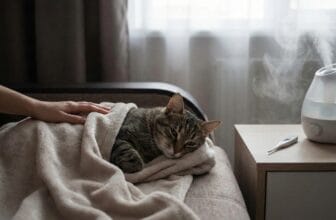
- The Steam Therapy Method: Bring your cat into the bathroom with you while you take a hot shower. Do not put them in the water. Let them sit in the steamy room for 10–15 minutes. The humidity helps thin the mucus in their nasal passages.
Step 4: Clean the Face
Use a warm, damp cotton ball to gently wipe away discharge from the eyes and nose. Crusty buildup can be uncomfortable and can damage the skin underneath.
Step 5: Monitor Appetite
This is your most critical metric. If your cat stops eating for more than 24 hours, their health can deteriorate rapidly due to a condition called hepatic lipidosis (fatty liver disease). If they aren’t eating, warm up wet food to increase the scent.
Medical Treatments and Expert Diagnoses

When home remedies aren’t enough, a veterinarian has a specific toolkit to diagnose why my cat is sneezing a lot.
Diagnostic Tools
- Physical Exam: Checking for fever, dehydration, and dental rot.
- Fluorescein Stain: A dye used to check for corneal ulcers (common with Herpesvirus).
- X-Rays or CT Scans: Used to look for tumors, polyps, or dental abscesses.
- Rhinoscopy: Inserting a tiny camera into the nose to look for foreign objects or tissue damage.
Common Treatments
- Antibiotics: These do not kill viruses, but they are often prescribed to treat secondary bacterial infections that take hold when the immune system is weak.
- Antivirals: Specifically for severe Herpesvirus cases (e.g., Famciclovir).
- L-Lysine Supplements: An amino acid that some vets believe helps support the immune system against viral flare-ups (though studies show mixed results, it is generally considered safe).
- Saline Drops: To flush irritants (only use vet-approved drops).
Expert Note: “Never give human cold medication (like Tylenol or Ibuprofen) to a cat. These are toxic and can be fatal even in small doses.” — Dr. Justine Lee, DVM, DACVECC.
Comparisons: Home Care vs. Vet Care
How do you decide between waiting it out and rushing to the clinic?
The “Wait and See” Approach
Pros:
- Reduces stress (cats hate carrier travel).
- Saves money if it is just mild allergies.
- Allows the immune system to do its job.
Cons:
- Risk of condition worsening.
- Risk of dehydration.
- If it is a foreign object, waiting causes tissue necrosis.
The “Vet Visit” Approach
Pros:
- Accurate diagnosis.
- Immediate relief for symptoms (anti-nausea, fluids).
- Peace of mind.
Cons:
- Cost.
- Stress for the animal.
The Verdict: If the sneezing persists for more than 48 hours, or is accompanied by any color of discharge (green/yellow/red), choose the Vet Visit.
Frequently Asked Questions (FAQs)
Can cats get colds from humans?
Generally, no. The viruses that cause human colds (Rhinovirus) do not affect cats. However, there have been rare instances of cats contracting COVID-19 from humans, though symptoms are usually mild. Conversely, humans cannot catch “cat flu” (Herpesvirus or Calicivirus).
Why is my cat sneezing blood?
Sneezing blood (epistaxis) is not normal. It can indicate a foreign object (like a grass seed) stuck in the nasal passage, a severe fungal infection, a clotting disorder (rat poison ingestion), or nasal tumors. This requires an emergency vet visit.
Can I give my cat Benadryl for sneezing?
While Diphenhydramine (Benadryl) is sometimes used for allergies in pets, dosing for cats is tricky and overdose is possible. Furthermore, many OTC allergy meds contain decongestants that are toxic to cats. Never medicate without explicit dosage instructions from your vet.
Why does my cat sneeze when he is excited?
This is often called the “excitement sneeze.” When a cat is happy or playful, they may wrinkle their nose or experience a slight increase in nasal secretion, triggering a sneeze. Unless it is constant, it is usually harmless.
My indoor cat never goes out. How did they get a virus?
Viruses like Feline Herpesvirus are extremely common. Many kittens contract it from their mothers before you even adopt them. The virus stays dormant in their system and “wakes up” (recrudescence) years later due to stress or age. You can also track in virus particles on your shoes or clothes.
Conclusion
Hearing a sneeze now and then is part of pet ownership. But when you realize, “My cat is sneezing a lot,” it is a signal that their body is fighting something off.
Whether it is a simple reaction to a dusty litter box or a flare-up of feline herpesvirus, your role is to observe, support, and act. By monitoring the color of their discharge, checking for appetite loss, and ensuring their environment is clean and humid, you can help your feline friend breathe easier.
Next Recommended Action:
If your cat has been sneezing for more than two days or has green/yellow discharge, call your veterinarian today to schedule an appointment. While you wait, place a humidifier near their favorite sleeping spot to ease their congestion.
Sources
- Cornell University College of Veterinary Medicine – Feline Upper Respiratory Infection. Link to Cornell Feline Health Center
- American Veterinary Medical Association (AVMA) – Respiratory Disease in Cats. [suspicious link removed]
- PetMD – Why is My Cat Sneezing? Link to PetMD
- International Cat Care – Cat Flu (Upper Respiratory Infection). Link to iCatCare